AURUM · The Great Work
Press Kit
Written for a deadline.
Factsheet
- Title
- AURUM · The Great Work
- Developer

- Founded
- 2026
- Based in
- Sofia, Bulgaria
- Platforms
- iOS and Android
- Release
- Available on the App Store and on Google Play.
- Price
- Free. No advertising of any kind, and no ad SDK in the build. What money changes is how a night looks and sounds. What it never changes is who finishes it.
- Genre
- Puzzle, physics
- Music
- Six original pieces: First Gold, Quicksilver, Nigredo, Citrinitas, Rubedo and Aurum. The same six are the album AURUM · The Great Work (Original Game Soundtrack), on Apple Music and Spotify.
- Languages
- The game is in English. This site is in English and Bulgarian.
- Website
- aurum.kirilov.studio
- Press contact
- aurum@kirilov.studio
Description
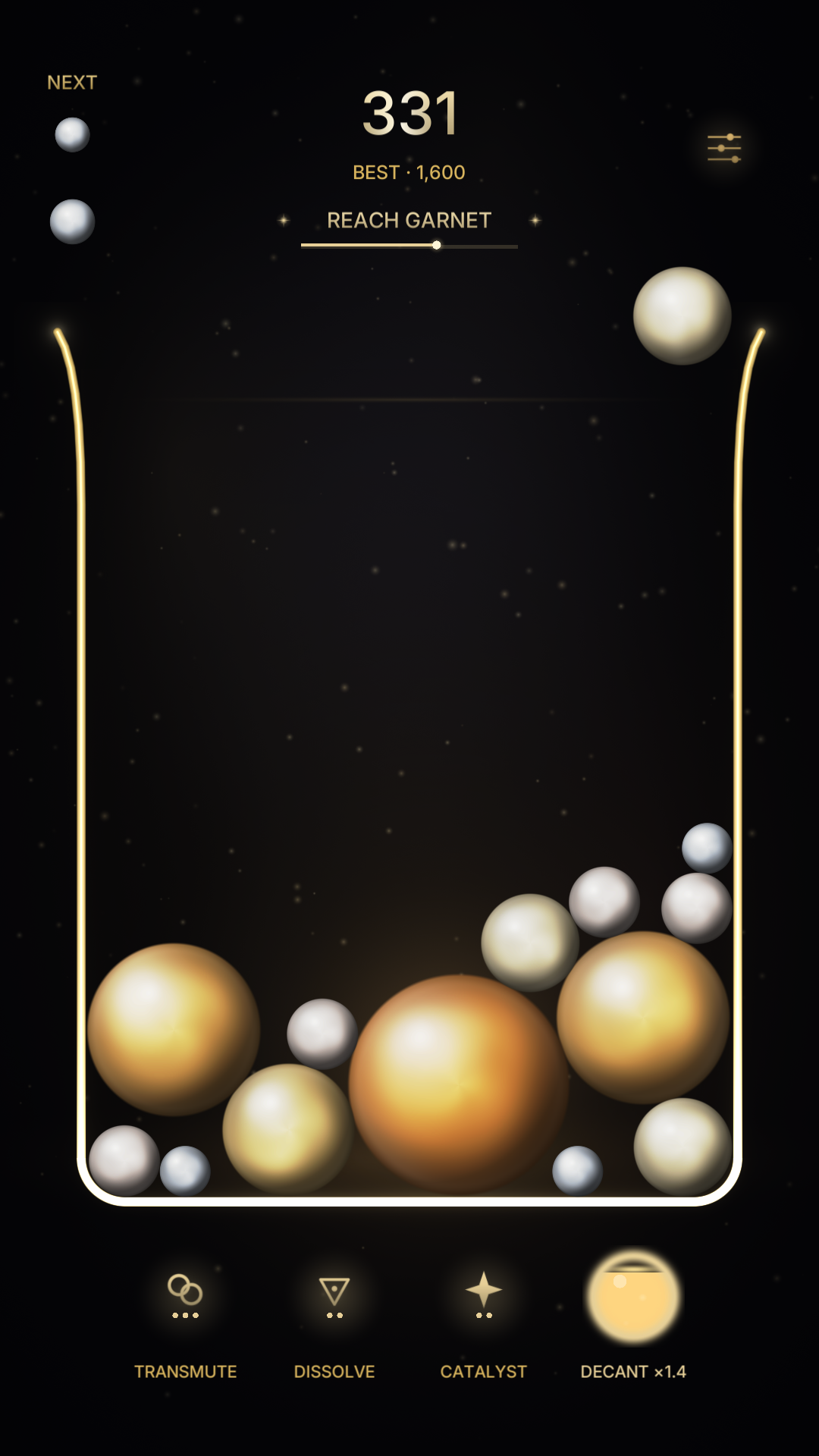
AURUM by Studio Kirilov is a physics merge game about transmutation. Substances fall with true weight into a glass vessel. Two of a kind glide together and fuse into the next and rarer form, eleven forms in all, from Moonstone to living gold. Working the vessel heats it, and the one decision that runs through every night is whether to pour the work off and bank it, or ride the heat and risk everything the night has made.
The music runs under the work rather than over it. Every merge lands on the beat of one of six original pieces and takes the seat of the lead melody while you play, so a cascade cannot sound wrong however fast it comes.
History
AURUM is the first title of Studio Kirilov, an independent Bulgarian studio founded by Kalin Kirilov. It began with a bench and a standard nobody was going to relax, and with one question: whether patience and honest physics could make base matter feel like alchemy.
Features
- Weight is real. Mass follows size, contact settles instead of snapping, and a night can be replayed exactly as it fell.
- Eleven forms of matter, each with its own light. Only the first five ever fall. The rest are made.
- The tria prima bend the merge rule. Quicksilver lifts what it touches as far as the seventh form, and rolls off the eighth. Sulphur throws whatever it lands on two forms higher. Salt dissolves what it reaches back to essence.
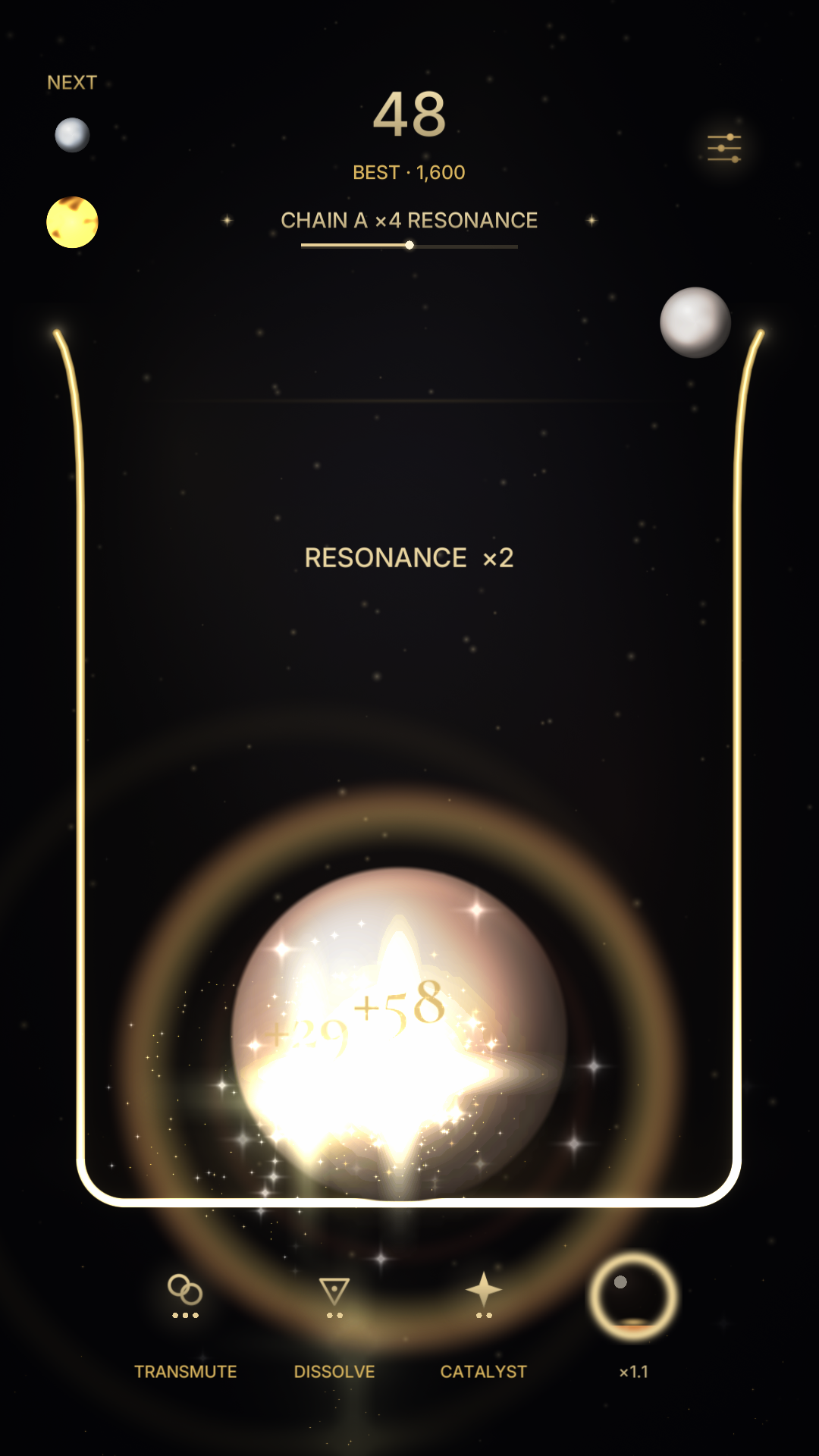
- Working the vessel heats it, and the heat is the whole risk. Pour off, or dare the brim.
- Four ways to play: sixteen designed stages, Endless opened by The Draw, a Daily seeded from the date itself, and Zen.
- Every merge strikes a note, eleven in all from one pentatonic scale, and each lands on the beat, so a cascade cannot sound wrong.
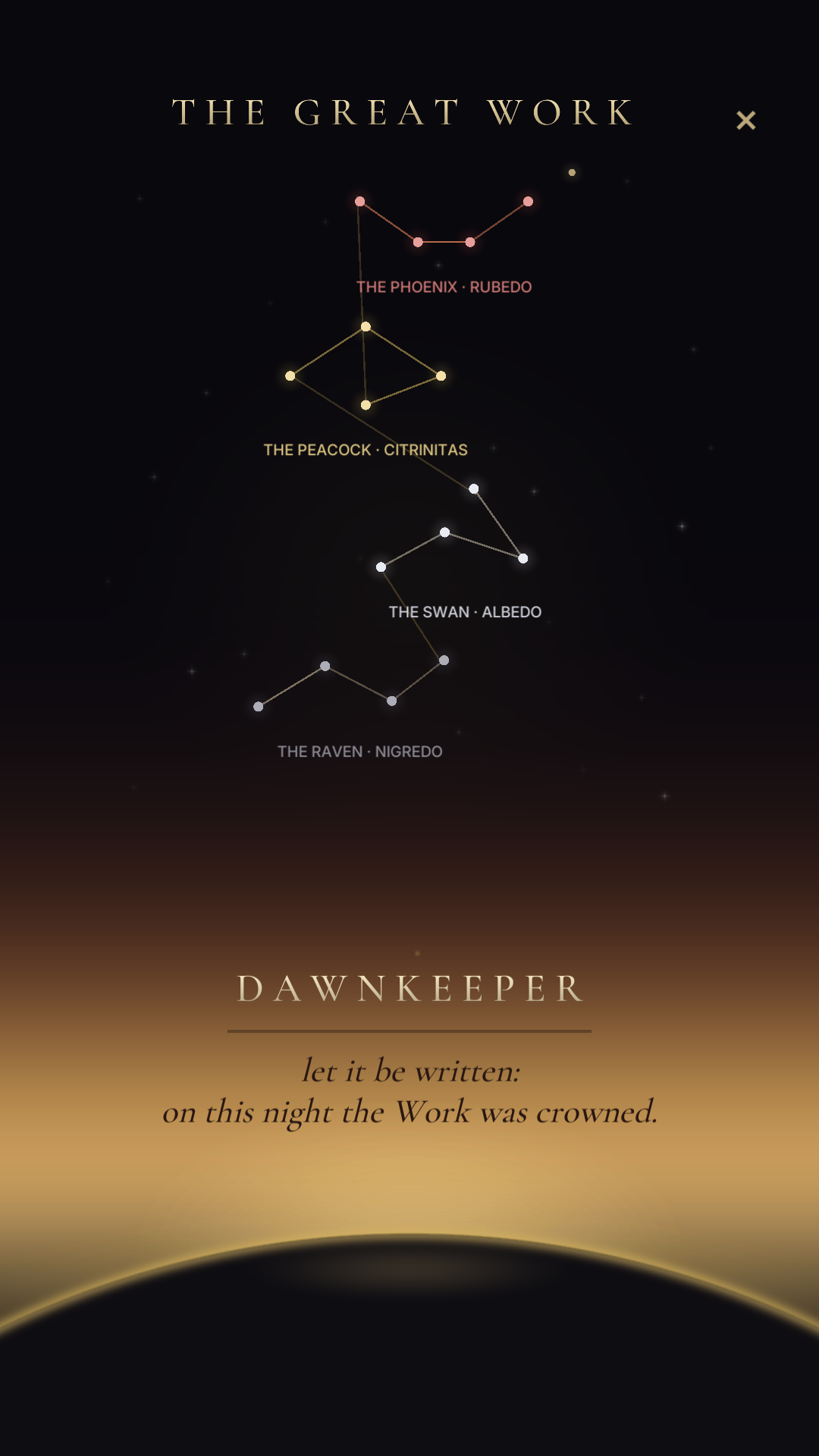
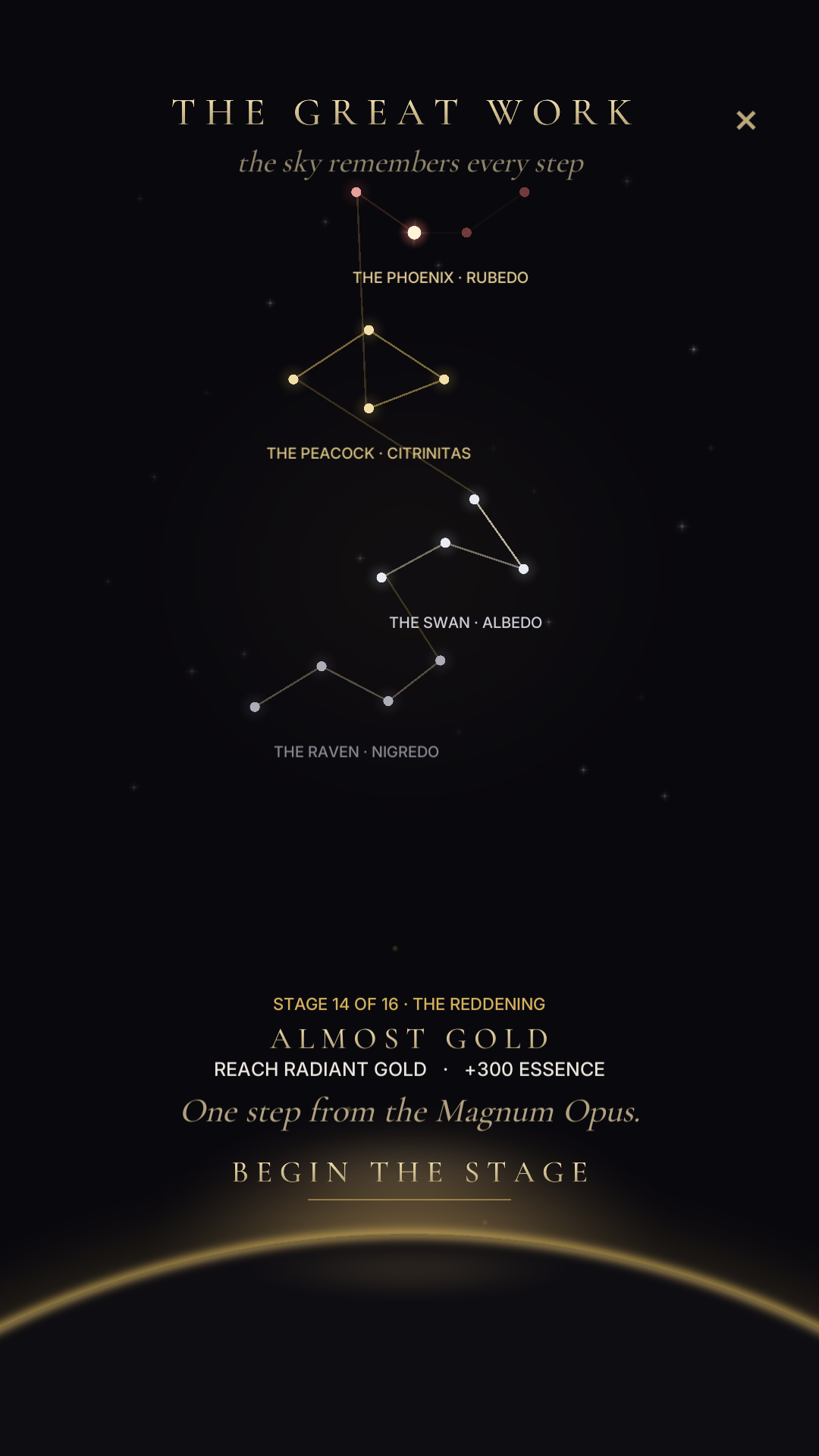
- The campaign is drawn as a sky, sixteen stars across the four constellations of the Magnum Opus.
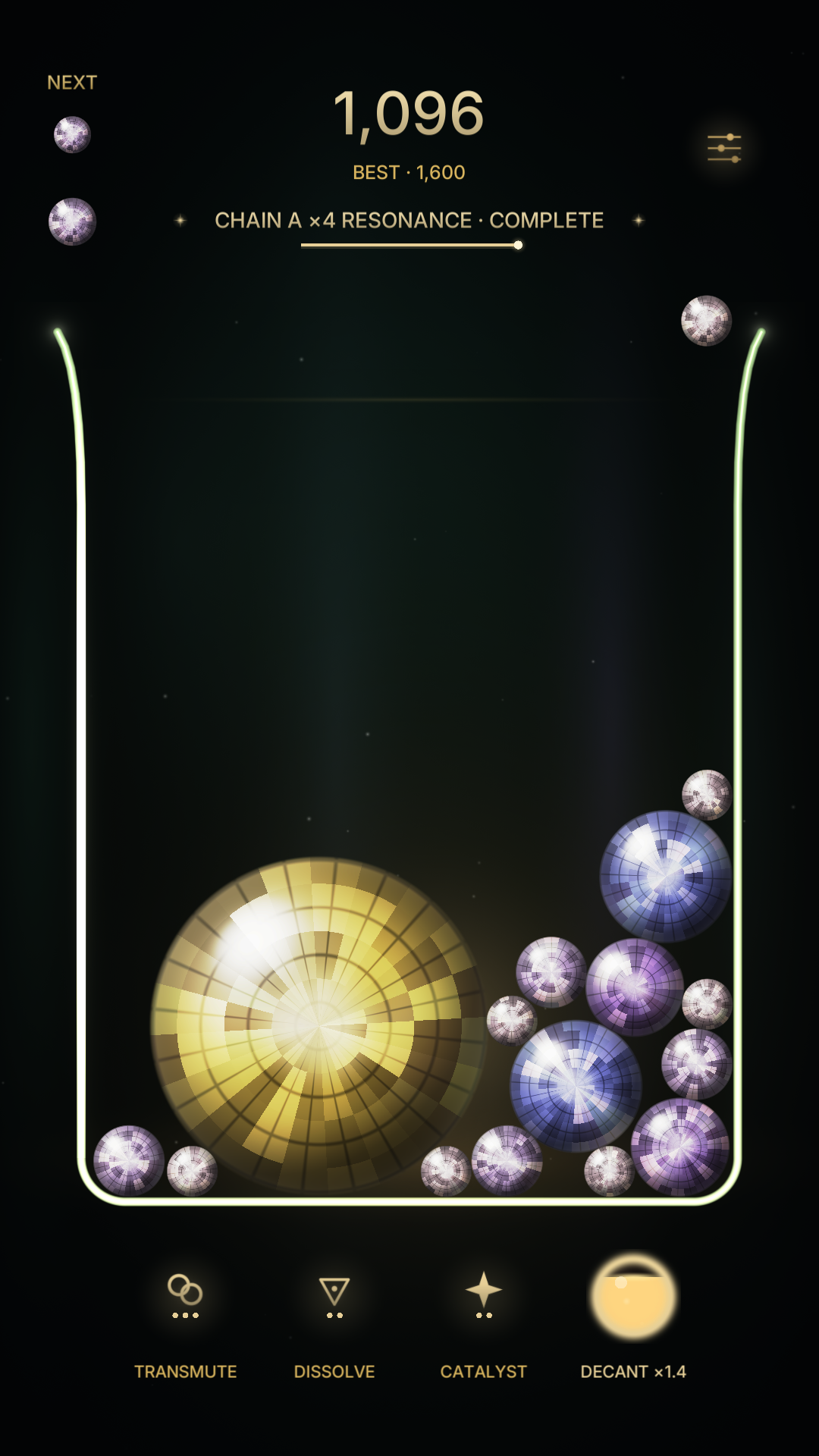
- Six rites to wear: The Forge, Celestial Rite, Verdant Bloom, Obsidian Rite, Nocturne and Cherry Court. Each dresses the matter, the vessel, the air and the voice together, and each climbs Nascent to Radiant through play alone.
- No advertising, and no ad SDK in the build. Nothing sold decides a night. Beauty, never power.
Videos and images
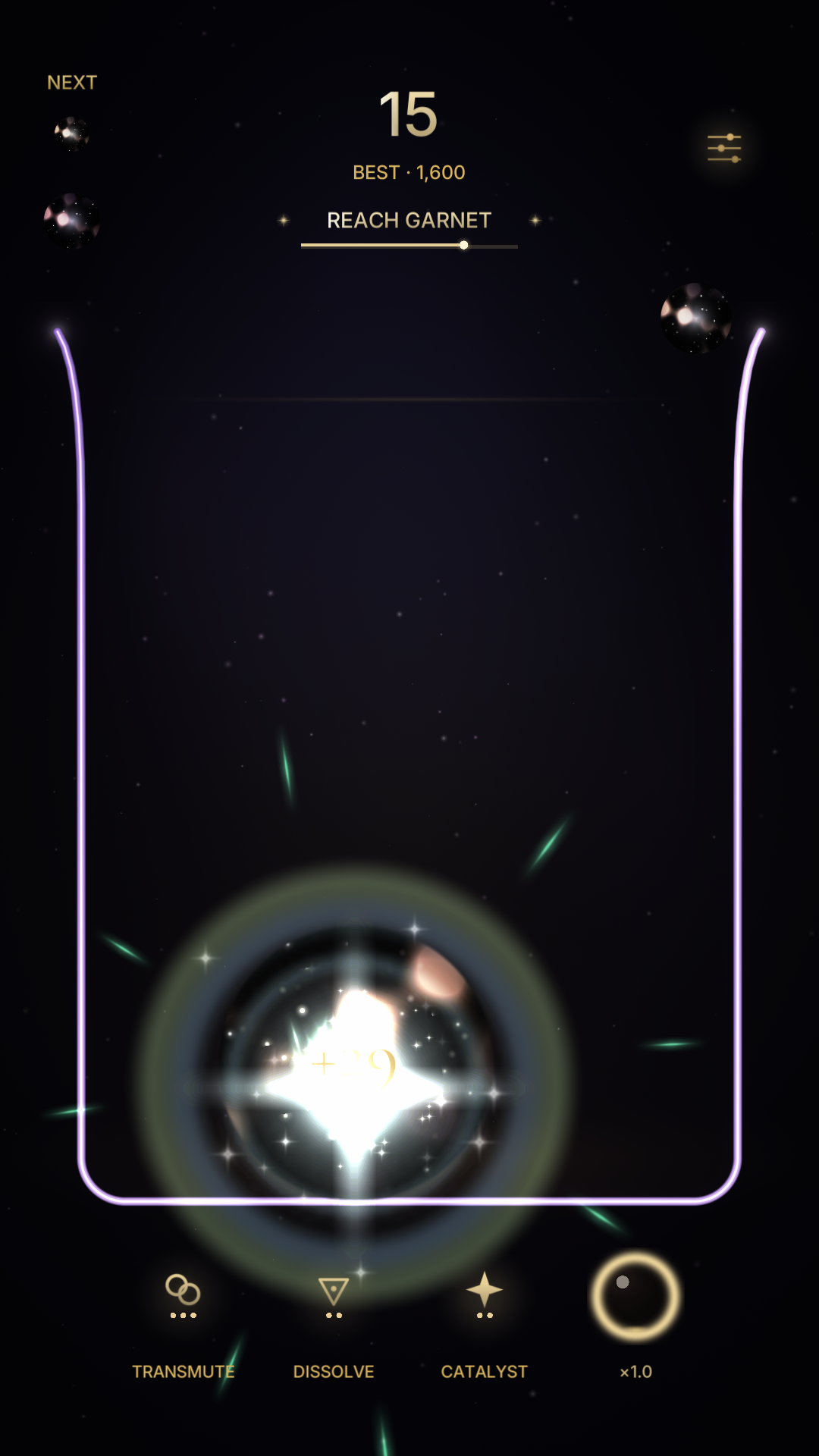
Six of the frames both stores carry, and each one opens its full file at 1080×1920.
Logo and name
The name is set AURUM, capitals, in Cormorant Garamond. Please do not redraw it, recolour it, outline it or set it in another face. On dark grounds use the gold treatment shown across this site. The game’s own files are here, so nothing has to be traced from a screenshot: the logo kit holds the wordmark in gold, in ivory and in ink, each as an outlined vector and at 2400 pixels, with the application icon.
The publisher’s mark can be taken from here: horizontal lockup, the mark alone and a vector for print. Ivory on night. On a light ground the ink cut is used. The mark is never redrawn, recoloured or rotated, and its clearspace is half the K’s cap height on every side.

Monetisation permission
Studio Kirilov grants permission to monetise videos of AURUM gameplay (Let’s Plays, reviews, streams) on platforms such as YouTube and Twitch. This permission covers the game’s own content and music as they appear in play.
Credits
- Studio Kirilov, design, engineering, art and music
- Founded by Kalin Kirilov
Contact
aurum@kirilov.studio for press, kirilov.studio for the studio itself.